
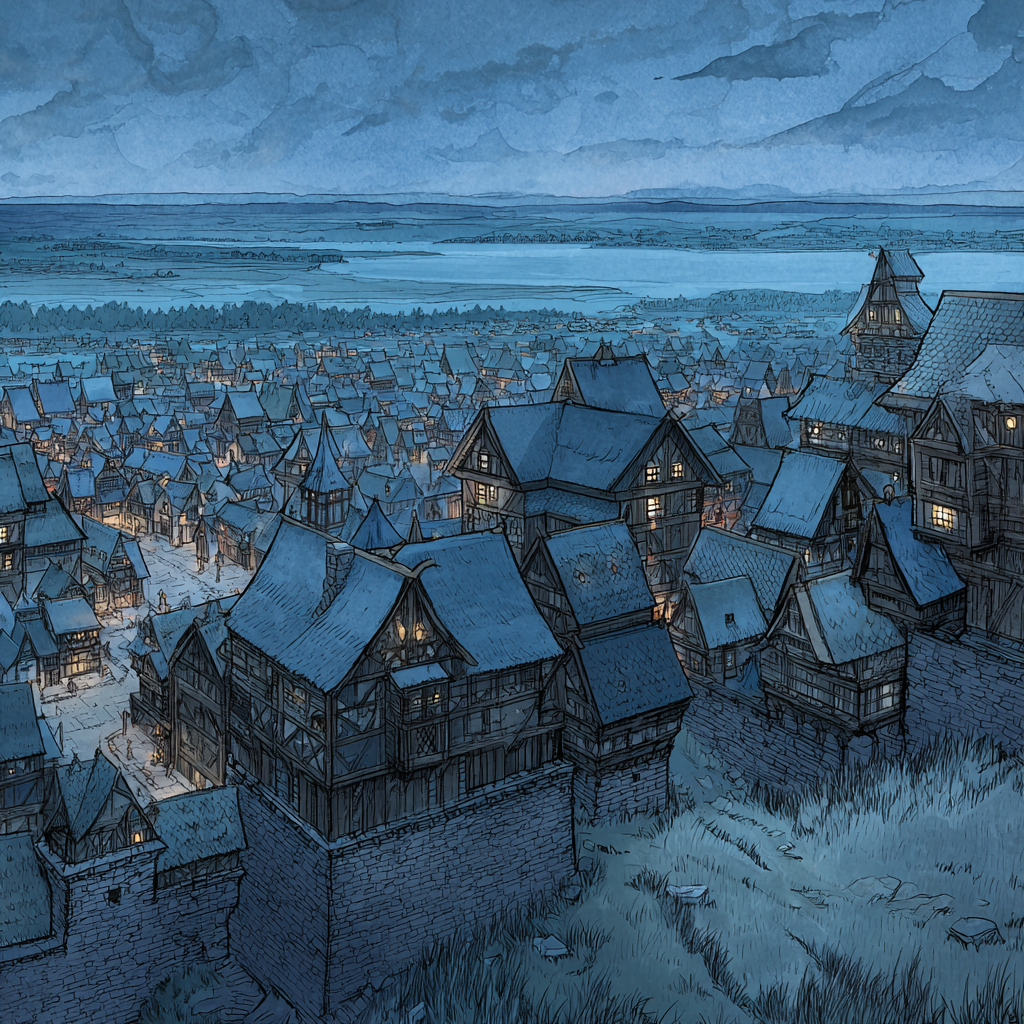
The city of Hevenin had once been a wonderful place to live—or so Prylof had been told many times by the older folks who lived there. He had never asked them about the days of old, and didn’t need to. If you encountered an elderly resident and stood still for long enough, they would tell you all about how the light of the sun used to illuminate every inch of the city, about how it was a warm place with friendly neighbors who knew and helped one another, about how it was optimistic, industrious, and proudly self-sufficient.
As a child, Prylof had mostly dismissed these stories as the nostalgic ramblings of walking, talking relics of a bygone era. But as he reached adulthood, Prylof began to think differently. He no longer viewed their current predicament as inevitable. He began to believe that perhaps life could be different from the way it was now, maybe very different. At times, he even found himself longing for the days described by his ancient neighbors—as if he felt nostalgia for a time that he himself had never actually experienced. He knew of course that they could not go back. But sometimes he wondered if there was another way forward.
The glory days in these tales, of course, all referred to the time before The Keeper took control of Hevenin. And while there was complete agreement among the elders that the days of old were preferable to today, there was very little agreement as to exactly when or how The Keeper had come to rule Hevenin, only that he had.
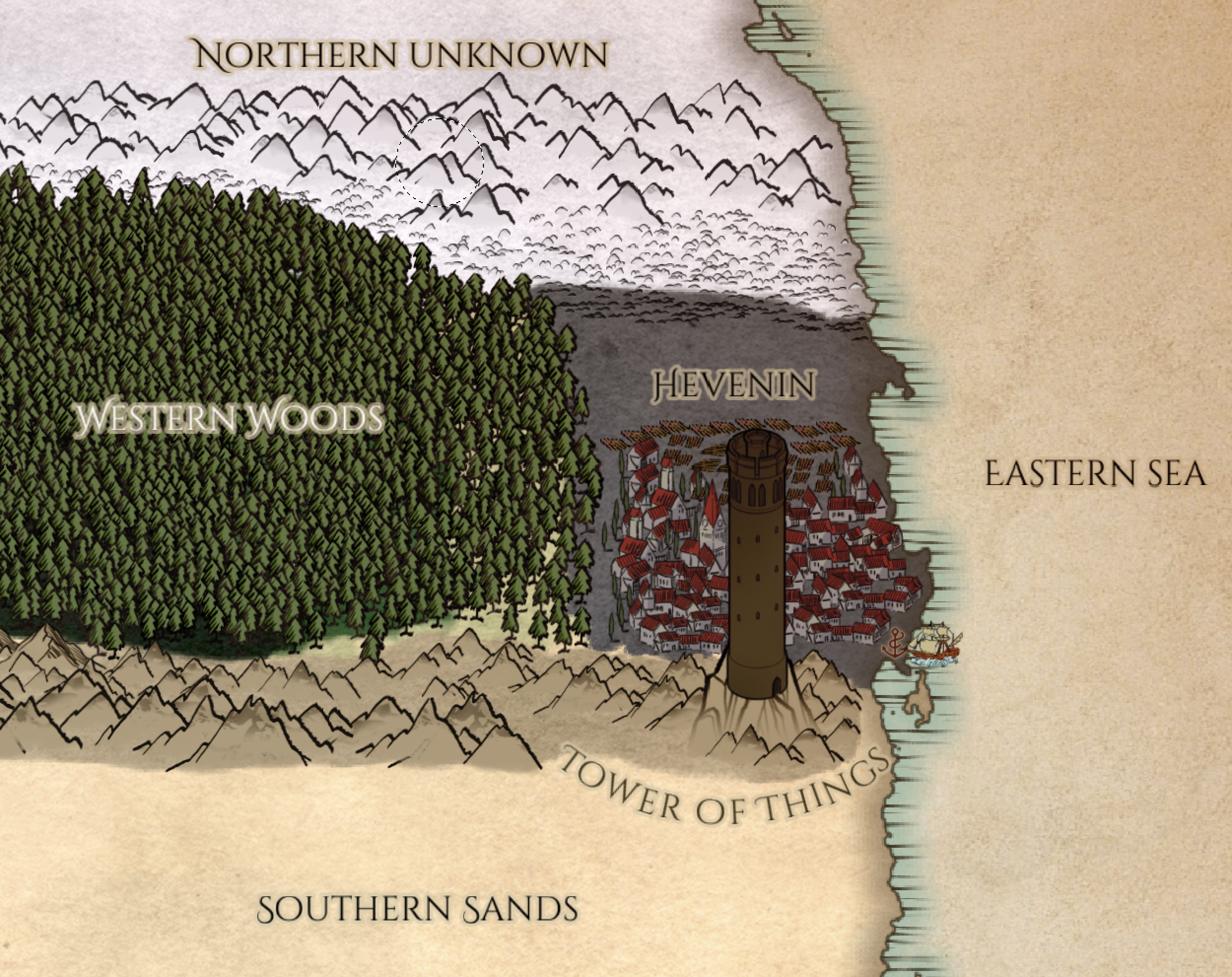
The true nature of The Keeper was mysterious, at least to the common folk. Some said he was a man. Some said he used to be a man. Some said he was merely shaped like a man. In any case, it was understood that he was a powerful and shady figure who lived in the mountains at the southern edge of Hevenin. The Keeper was also something of a collector. In fact, that had become his defining feature and the source of the name given to him by the townsfolk.
The Keeper loved things—all things. He didn’t love things for their own worth; it was having things that he loved. He derived all satisfaction from how many things he had, and prided himself on having more things than everyone else, and seemingly always having more things than he used to have. It was said that at one point, things started mysteriously disappearing from Hevenin. At first, there was little agreement as to where the things were going, though some told rumors of a creature that had been taking things up to the mountain and keeping them in a cave.
But eventually, the fate of the missing things was no longer a mystery. The Keeper had run out of room in the cave, and so he began to stack all of his things. And if The Keeper was good at one thing, it was stacking things. He stacked his things skillfully, some would say magically, higher and higher and higher until the stack could be seen from any part of the city below. This ever-growing stack become known as “The Tower of Things” and what was once an object of intrigue became the defining feature of Hevenin.
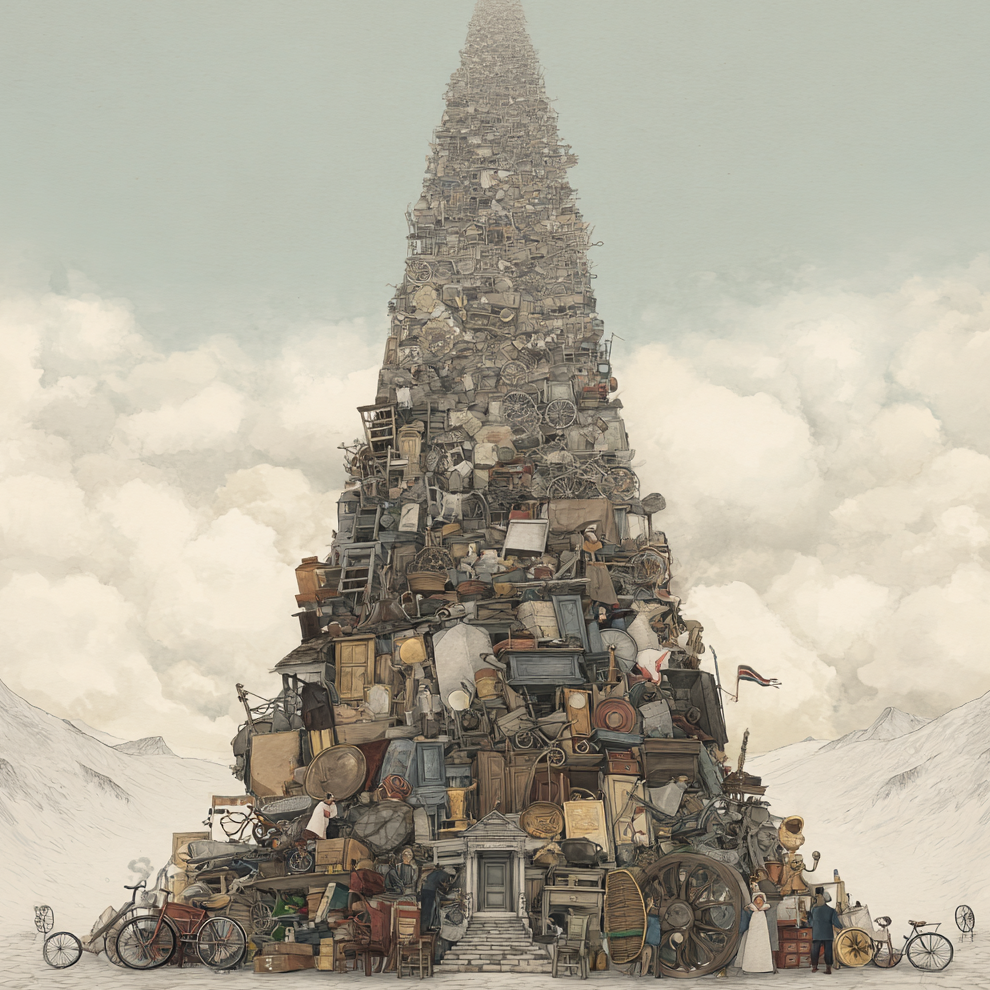
The Keeper continued to add to the stack relentlessly, obsessively, consuming all of his time and energy. Some would say it became his sole measure of worth and even his reason for existing. And as the tower grew taller, its shadow grew longer. The Tower of Things eventually stretched so wide and climbed so high in the southern sky that it completely blocked out the sun in the northern city of Hevenin. And the entire city was engulfed in permanent darkness.
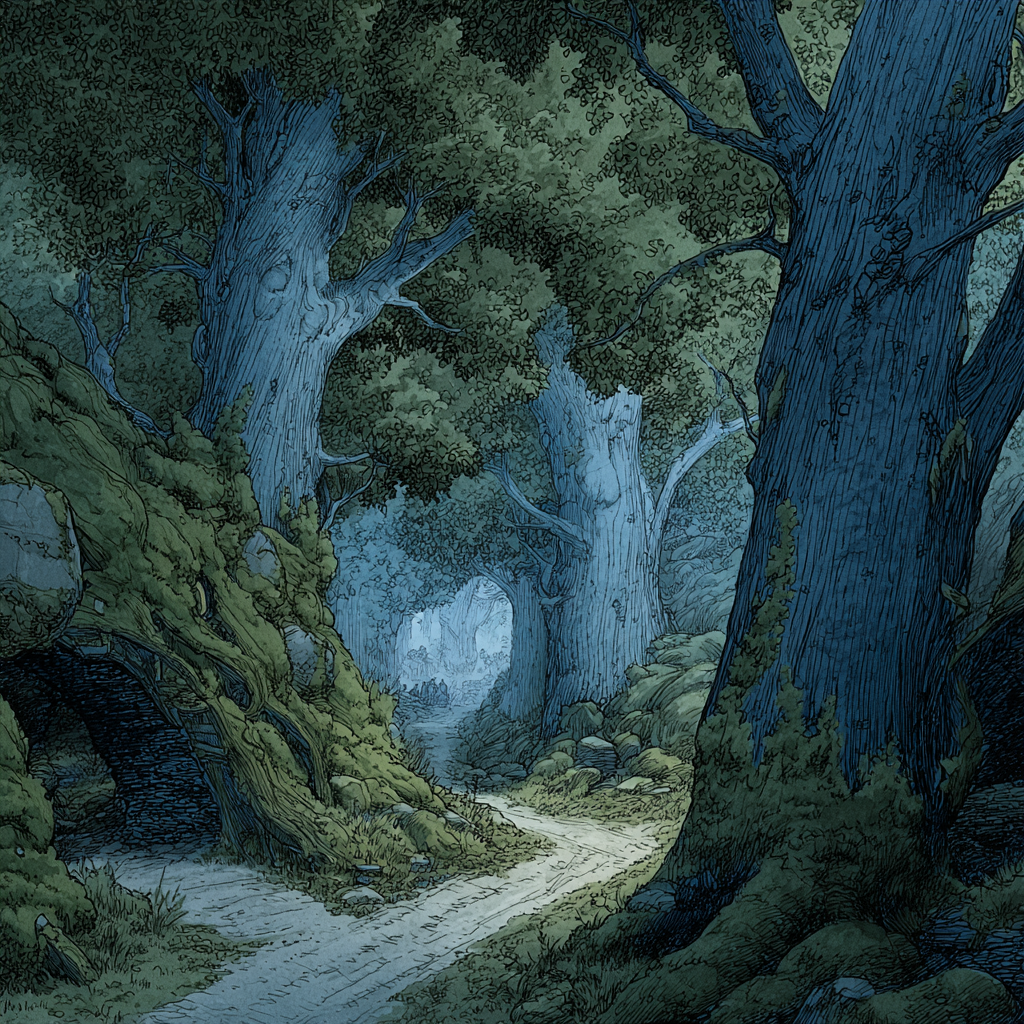
By Prylof’s time, the shadow of The Tower of Things stretched as far west as the tree line of the Western Woods, a mysterious forest said to be filled with strange creatures, enchantments, and great dangers. In the past it was said that brave villagers would explore and hunt in the forest, but these days that was reduced to occasional foraging in the shallow edges where the trees were thinner and some light crept through to the forest floor. Prylof wasn’t sure if he bought into all of the magic talk, but the idea of danger and mystery was enough to keep him from crossing the tree line.
The Tower’s shadow also stretched north over what had once been farmland, all the way to the northern border of Hevenin and the beginning of what was called The Northern Unknown, a cold, rocky, and desolate place that had received explorers in the past, but never returned them to Hevenin. South of this border, vegetation used to flourish, but in the perpetual darkness, none could survive. Green became grey and over time even the various shades of grey converged into a single shade. The shadowy farmland had ceased to yield crops, and as a result, almost all of Hevenin’s food came to them from other places. In fact, Prylof’s forge was a rare case of continued industry in Hevenin, as fear of The Keeper had pushed most production away. Even painters and poets, once inspired by light, shadow, and the many colors of nature, started to create in ways that all seemed the same. Craft and production gave way to mere consumption and any sense of unique identity faded away.
These days most things came to Hevenin on ships by way of the Eastern Sea. The city port on the eastern edge of the city was the eastern limit of the tower’s shadow and Hevenin’s only real connection to the outside world. There used to be trade routes that went south through the mountains to the villages of the Southern Sands, but The Keeper had long since cut those off. Any attempts to bring things to or from Hevenin through the south was as good as donating them to the Tower of Things.
Angry residents had attempted to confront the keeper in the past, but those who did met their end. Some say they are buried in the mountains. Some say their bodies are stacked in the Tower of Things. Some say The Keeper has turned them into ghoulish creatures who mindlessly aid in his collection efforts. All versions of the story have served as sufficient deterrents to any subsequent attempts at defeating The Keeper.
By the time our story begins, Hevenin had reached a point at which the residents simply accepted their conditions as an unavoidable fact of life. A few occasionally grumbled under their breath, some pretended that The Keeper and the Tower didn’t exist, and some had come to worship the Tower of Things as a monument of achievement. Members of the latter group had even begun to erect their own towers in imitation, though none could compare to The Tower of Things.
Some attributed all of this behavior to lack of sunlight; some blamed mental exhaustion; others said it was a response to the hypnotic effect of what they had come to call “The Noise.” The Noise was a more recent artifact of The Keeper’s presence that had not been there in the beginning. The Tower of Things had begun to emit a strange sound—a sort of auditory static that could be heard throughout the city at all hours of the day and night. Depending on who you asked, it might have been described as a humming, a hissing, a crackling, or a whistling. Some viewed it as a neutral presence, while others surmised that The Keeper was manufacturing it for nefarious reasons.
Again, it was only adults who noticed or discussed The Noise. The children of Hevenin had never known life without it, so to them, it might as well be air. And from the perspective of children, the old folks lamenting the loss of silence, the sound of wind, or the singing of birds, might as well have been shaking their fists at a passing cloud.
All of these conditions—the lack of local identity, the deep sense of resignation, the isolation, the constant noise, and the ever-present darkness—all tied back to a single source: The Keeper. It was said that all things eventually went to the keeper, that anything you made would someday become his, and that whether you knew it or not, you worked for The Keeper.
Sometimes late at night, when the volume of The Noise was at its lowest, curious townsfolk would sneak up to the foot of the mountain and listen. From here you could not see The Keeper, but it was said that you could hear him stacking his things. And amidst the clicking and clacking of his stacking, you could also hear him muttering to himself:
I am The Keeper, The Keeper of things
I covet and capture and corral and cling
I keep what I find, I keep what I make
I keep what I'm given, I keep what I take
I've heard talk in town from people that boast
About what they keep, but I keep the most
And so I am stacking up all of my proof
Above every man, every tree, every roof
Taller than statues that preserve the past
Taller than poles that fly fluttering flags
Taller than houses with full families
Taller than churches with faithful on knees
They'll watch as I build up my tower of things
They'll shake when they see all the power it brings
I'll snag and I'll stack until I've stacked it all
Then this tower of mine will be too tall to fall
When people look up with hope in their eyes
The things they don't have will envelop the skies
And with gaze pulled downward as if by a string
They all will bow down to the tower of things